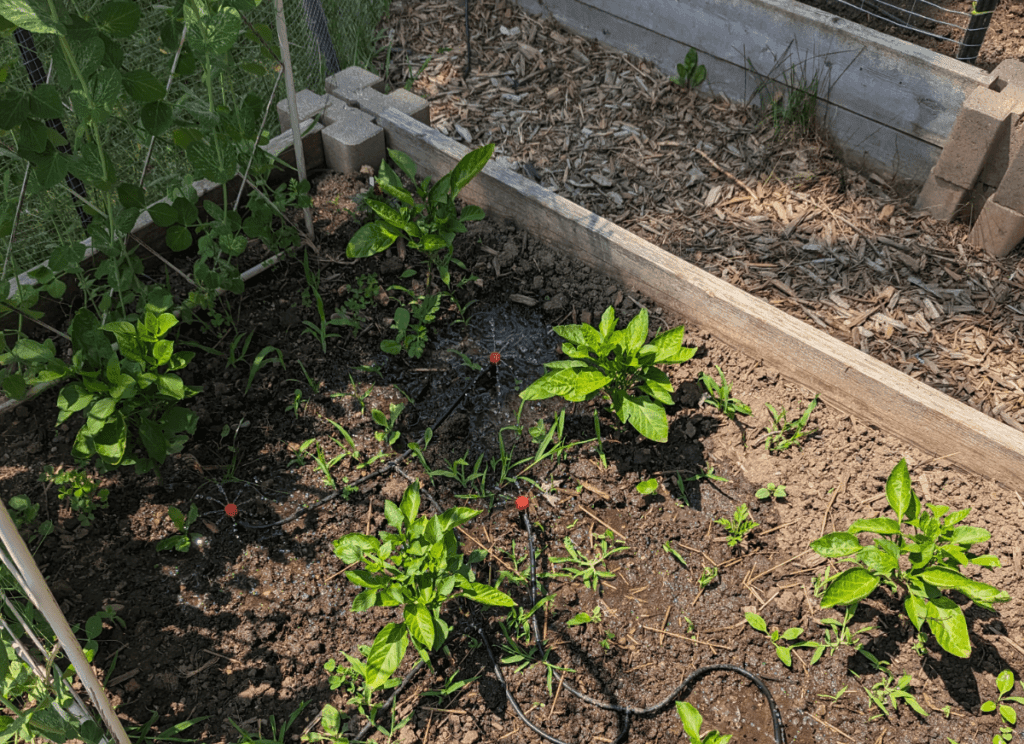
A lot of gardens look beautiful.
Raised beds, neat rows, a few tomato plants, maybe some lettuce and herbs.
There is nothing wrong with that kind of garden. It can be relaxing and it produces fresh food.
But if you are trying to actually feed a family, especially a big one, the garden has to be a little different.
When you have seven people eating every day, a handful of cherry tomatoes or a few salads from the backyard does not move the needle very much. What you need are crops that produce large amounts of real food.
Over time we learned to focus on vegetables that grow well here in Wisconsin and produce enough food to actually matter in our kitchen. Those are the plants that earn space in our garden every year.
If you are trying to build a garden that feeds your household instead of just decorating the backyard, these are the kinds of crops that make the biggest difference.
Green Beans Produce More Food Than Almost Anything Else
Green beans are one of the most productive plants we grow.
A small patch can produce pounds and pounds of beans over the season. When they start producing we can pick them almost every day.
They are also incredibly versatile. We eat them fresh with dinner, sauté them with garlic, and add them to stir fries. When the harvest really starts coming in, we freeze a lot of them so we can use them throughout the winter.
Sometimes the kids eat them faster than we can pick them, which honestly feels like a win.
Beans are one of the vegetables that makes it obvious why gardening matters. You plant a small area and suddenly you are bringing bowls of food into the house every few days.
Cucumbers Produce More Than People Expect
Cucumbers are another plant that produces far more food than people realize.
Once cucumber plants start producing, they tend to keep going. A few healthy plants can easily turn into bowls of cucumbers every week.
We eat a lot of them fresh, but cucumbers are also great for pickling and preserving. When the garden is producing heavily, it is one of the easiest vegetables to turn into food that lasts beyond the season.
They are simple to grow, productive, and useful in a lot of ways. That makes them an easy choice every year.
Tomatoes Do Much More Than Just Sandwiches
Tomatoes are one of the most useful crops in the garden.
Fresh tomatoes are great in salads and sandwiches, but the real value comes when you grow enough to preserve them.
We use a lot of our tomatoes to make salsa and pasta sauce. Having jars of homemade salsa in the pantry makes taco night a lot better. Pasta sauce from your own tomatoes also changes the way simple meals taste.
A garden might not produce an entire meal by itself, but a jar of homemade pasta sauce or salsa is one less thing you have to buy.
If you want to see how we store large harvests like this, I talk more about that in Canning, Freezing, and Preserving the Harvest, where I walk through the ways we store food from the garden for later in the year.
Peppers That Last for Years
Peppers are another crop that earns space in our garden every season.
Fresh peppers are great in everyday cooking, but what really makes them valuable is how well they preserve.
We dehydrate a lot of our peppers. Once they are dried they can last for years in the pantry.
I still have dried habaneros and jalapeños that came from a harvest three years ago and they are still perfectly usable today. When we need them, we simply crush them into flakes or grind them into powder.
It is one of the easiest ways to store a crop long term with very little effort.
Corn Is Worth Growing If You Have the Space
Corn takes more space than most garden crops, but if you have the room it can be worth growing.
Corn needs to be planted in a decent sized patch so it pollinates properly, but when it does well you end up with a lot of food.
Fresh sweet corn in the summer is hard to beat, and extra corn can be frozen or canned for later. Having corn in the freezer during the winter is another simple staple that helps fill out meals.
For families with enough space, corn is one of those crops that can quietly add a lot of food to the pantry.
Supplementing Your Food Is the Real Game
For most families, the goal of a garden is not total self sufficiency.
The real goal is supplementation.
If your garden provides fresh vegetables, jars of salsa, homemade pasta sauce, dried peppers, frozen beans, and a few other staples, that already makes a real difference in your food budget and your meals.
A garden might not be the entire meal, but it often becomes the best part of the meal.
Fresh Food Is Completely Different From Store Food
One thing that people forget is how different truly fresh food actually is.
Most grocery store produce was picked before it was fully ripe so it could survive shipping. It might spend days traveling across the country in a truck before it ever reaches the shelf.
Food from your garden is completely different.
When you pick something directly from the plant, it is fully ripe and at its best.
The flavor is stronger. The texture is better. The nutrients are still there because it has not been sitting in transportation or storage.
I always joke that until you have eaten a tomato or strawberry straight from the garden, you have never actually tasted one.
Strawberries are the best example. A ripe strawberry picked from the garden is completely different from what you buy at the grocery store. The flavor is deeper, sweeter, and stronger in a way that store bought berries rarely are.
It is honestly night and day.
Not All Food Has to Come From Your Garden
Another thing we have learned over the years is that you do not have to grow everything yourself.
Sometimes the best move is simply getting food directly from the source while it is in season.
Here in Wisconsin there are orchards and farms where you can pick fruit yourself. We have gone cherry picking at local orchards and bought strawberries directly from farms.
One year we picked up twenty pounds of strawberries from a local farm. It cost about thirty five dollars, which sounds like a lot until you realize how much fruit that actually is.
Twenty pounds of strawberries becomes a lot of jam, frozen berries, and desserts.
Buying produce this way can be far cheaper than grocery stores when you are buying in bulk during peak season. The same idea works with apples, pears, blueberries, and many other crops depending on where you live.
Gardening and seasonal harvesting work really well together.
Growing Food Changes the Way You Think About Meals
One of the biggest things gardening changes is how you think about food.
Instead of asking what you feel like eating, you often start with what is coming out of the garden that week.
Meals begin to revolve around what is ready to harvest and what needs to be used.
That rhythm is something I talk about more in How We Grow and Use Our Garden Year Round, because gardening is not just about planting seeds. It changes how the whole household interacts with food.
When the garden is producing, dinner is often only a few steps away from the backyard.
A Garden That Feeds a Family Looks Different
A garden that actually feeds people usually looks a little less perfect.
There are bigger patches of practical crops. There are plants chosen because they produce a lot of food. There are vegetables growing specifically because they help fill meals.
But when those plants start producing and you are bringing bowls of food into the kitchen every week, it becomes obvious why people keep gardening year after year.
The garden stops being decoration.
It becomes part of how you live.
– Just a note from the yard.