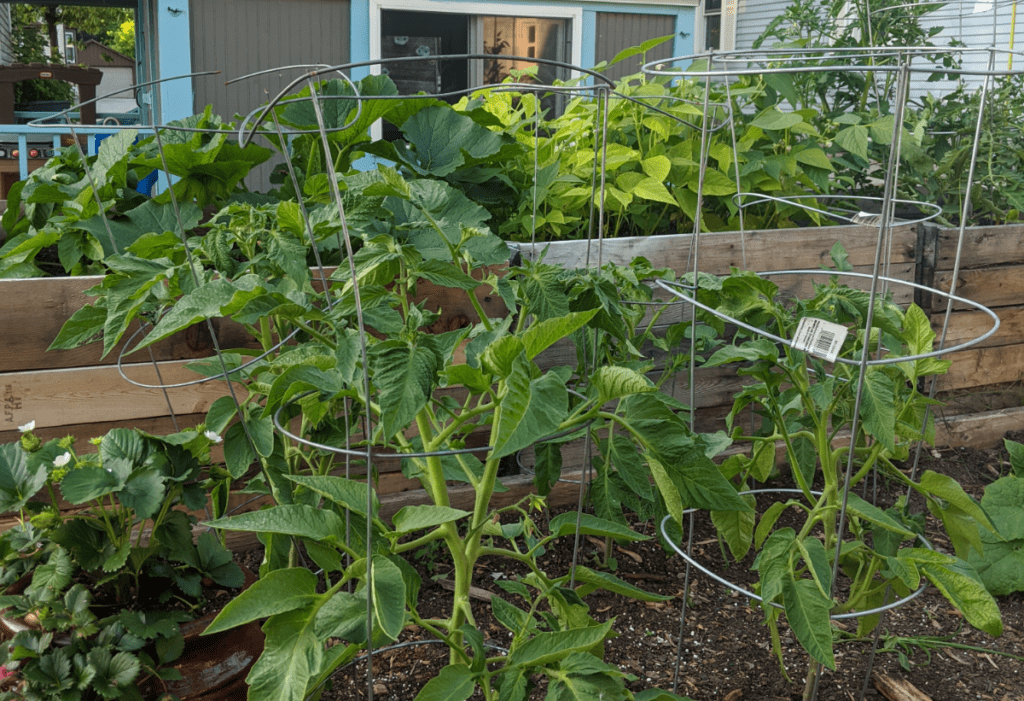
There’s a strange thing that happens when you start spending more time in a garden.
You slowly realize the garden doesn’t care about your schedule.
Plants don’t grow faster because you’re busy that week. Seeds don’t sprout on the timeline you’d prefer. Rain doesn’t arrive when it would be most convenient.
The garden moves at its own pace.
At first, that can be frustrating. Modern life trains us to believe that everything should be optimized and controlled. If something isn’t working, we assume we just need a better system, a faster tool, or a smarter plan.
But the garden doesn’t respond to urgency.
It responds to patience.
And if you spend enough time out there, that patience starts changing the way you think about time itself.
You can’t rush living things
When you plant a seed, there’s a moment where the work feels finished.
You’ve prepared the soil, spaced everything out, watered it in, and stepped back.
Then nothing happens.
Days pass. Sometimes a week or more. The soil looks exactly the same as it did the day you planted.
If you’re used to immediate feedback, that silence can feel strange.
But that’s where gardening starts teaching its first lesson.
You can’t rush living things.
You can care for them. You can create good conditions. But growth itself happens quietly and gradually, mostly out of sight.
Roots form before leaves appear. The real work is happening underground long before you see the first green shoot break through the soil.
Working with plants reminds you that some processes simply take the time they take. It’s a similar feeling to the kind of work I talked about in “What I Learn From Working With My Hands.” Physical work often follows its own rhythm, one that doesn’t respond well to being rushed.
The more time you spend doing that kind of work, the easier it becomes to accept that pace.
The garden rewards consistency, not intensity
Another thing the garden teaches fairly quickly is that big bursts of effort rarely matter as much as steady attention.
You can spend an entire Saturday trying to fix everything at once — pulling weeds, planting, watering, building beds — and it still won’t replace the value of simply checking the garden for a few minutes every day.
A little water here.
A quick harvest there.
Pulling a few weeds before they spread.
None of it feels particularly dramatic, but it adds up.
In many ways the garden runs on the same principle as most meaningful parts of life: small, repeatable actions done over time.
Those kinds of rhythms show up in other places too. Cooking at home works the same way. Maintaining a household works the same way. Even slowing your life down a little tends to happen through small changes rather than huge ones.
That’s part of the idea behind Choosing Simplicity Over Easy in Everyday Life. Simple routines aren’t flashy, but they often work better than complicated systems that try to optimize everything.
The garden quietly proves that point all season long.
Not everything needs to be perfectly timed
One of the biggest myths about gardening is that everything has to be done perfectly.
Perfect planting dates.
Perfect spacing.
Perfect soil conditions.
The truth is most gardens are far more forgiving than that.
You plant something a little late — it still grows.
You forget to water one evening — the plants recover.
A few weeds sneak in — the world doesn’t end.
Early on it’s easy to feel like you’re constantly doing something wrong. But after a few seasons you start realizing the garden isn’t asking for perfection.
It’s asking for attention.
If you show up regularly and pay attention to what’s happening, the garden will usually meet you halfway.
That realization is strangely freeing. It removes a lot of the pressure and turns the whole thing into something more enjoyable.
You’re not trying to create the perfect garden.
You’re just learning to work with the one you have.
The garden slows you down in the best way
Spending time in the garden has a way of changing how the rest of your day feels.
You step outside planning to check on a few plants and suddenly twenty minutes have passed.
You notice how much something grew since yesterday. You watch a bee moving slowly from flower to flower. You pick a few vegetables for dinner.
None of it feels urgent.
But it doesn’t feel wasted either.
That kind of quiet time is surprisingly rare in modern life. Most of our days are filled with noise, screens, and small pressures that keep our minds constantly moving.
The garden offers a different pace.
It’s part of the reason I try to get outside even when I don’t really feel like it. Once I’m out there, the resistance usually fades pretty quickly. I wrote a little about that habit in I Go Outside Even When I Don’t Feel Like It.
The act of stepping outside often resets the rhythm of the day.
The garden just happens to give you a reason to stay there a little longer.
Let the garden set the rhythm sometimes
The longer I keep a garden, the more I appreciate the way it quietly pushes back against the rush of modern life.
It reminds you that not everything can be optimized.
Some things grow slowly.
Some things take a season.
Some things take years.
The garden doesn’t care about your schedule.
But if you’re willing to work with its rhythm instead of fighting it, it gives something back that’s harder to find anywhere else.
A slower, steadier way of moving through the day.
And sometimes that’s exactly what we need.
– Just a note from the yard.