I have been gardening most of my life.
First with my grandparents and parents, and now for the last thirteen years with my wife and kids.
Gardening alone is one thing.
Gardening with five kids is something else entirely.
It is slower. Louder. Less efficient.
And far more important.
If the goal is a perfect garden, do it yourself.
If the goal is capable adults, bring them with you.
Start Small and Let It Be Theirs
Kids do not need responsibility for the whole garden.
They need ownership of something small.
A row of beans.
One tomato plant.
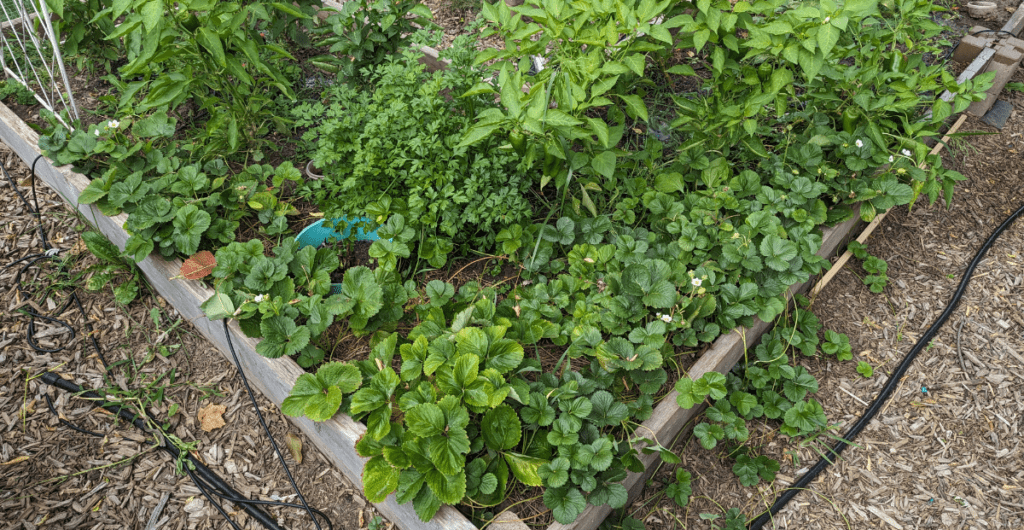
Part of the strawberry patch.
When it feels like theirs, they pay attention differently.
They check on it.
They notice changes.
They care if something struggles.
In our home, the garden is not a hobby off to the side. It feeds directly into how we manage food and spending, the same system I explain in How We Feed a Family of 7 on a Budget.
When kids see what they grow show up at dinner, it becomes real.
Let Them Make Mistakes
They will overwater.
They will forget to water.
They will pick vegetables too early or too late.
They will step on something you just planted.
It happens.
If every mistake turns into correction, they stop wanting to help.
If mistakes are normal, they keep showing up.
The garden is a safe place to fail. Seeds can be replanted. Plants grow back. The lesson costs very little, but it teaches patience and responsibility in a way few other things do.
Show Them the Full Food Cycle
The real lesson is not just planting.
It is the entire cycle.
Seed. Growth. Harvest. Preservation. Meal.
When tomatoes turn into sauce and that sauce gets canned, then opened months later for dinner, the connection is clear. I talk about that full system in How We Grow and Use Our Garden Year Round and continue it in Canning, Freezing, and Preserving the Harvest.
When kids help freeze twenty pounds of strawberries picked in season, then eat those berries in winter smoothies, they understand value in a way a grocery store trip never teaches.
Food does not just appear. It takes time, effort, and planning.
Some Kids Will Grow Out of It
Here is the honest part.
Not every child will love gardening.
My two teenage step children could care less about it most days.
They are not volunteering to weed.
They are not researching heirloom varieties.
They might pick a few strawberries if we are out of town and they are home. They will definitely eat fresh green beans faster than I can pick them.
And that is fine.
Even if they are not passionate about gardening, they are still absorbing something.
They are learning patience.
They are learning that food takes time.
They are learning what it takes to grow what they eat.
Sometimes the lesson is not enthusiasm.
Sometimes it is exposure.
Exposure still matters.
Real Tools and Real Responsibility
When kids are ready, give them real tools.
A small shovel.
A real watering can.
A harvest basket.
The same way I talk about using practical equipment in Essential Kitchen Tools for Feeding a Large Family, capability builds confidence. Children rise to the level of responsibility you give them.
If they spill water or drop produce, it is part of learning.
The goal is not perfection.
The goal is competence.
The Garden Teaches Patience Better Than Words
You cannot rush a tomato plant.
You cannot argue with frost.
You cannot demand strawberries before they are ripe.
The garden runs on seasons, not convenience.
That rhythm teaches patience and delayed gratification in a way lectures never will.
Even if a child grows out of gardening later, they remember the feeling of waiting for something to ripen. They remember harvesting. They remember jars on the counter after a long day of preserving.
Those memories shape how they see food and effort.
It Does Not Have to Be Big
You do not need acres.
You do not need a homestead.
You need exposure.
Even buying fruit in season from a local farm, like we discuss in How We Grow and Use Our Garden Year Round, teaches the same lesson. Let them pick apples. Let them carry strawberries. Let them help freeze the harvest.
Participation matters more than scale.
Final Thoughts
With five kids, the garden is not perfect.
It is messy. Inconsistent. Occasionally ignored.
But it is real.
Some kids will love it. Some will tolerate it. Some will grow out of it.
If they learn patience, effort, and where their food comes from, the garden has done its job.
And that is enough.
– Just a note from the yard.