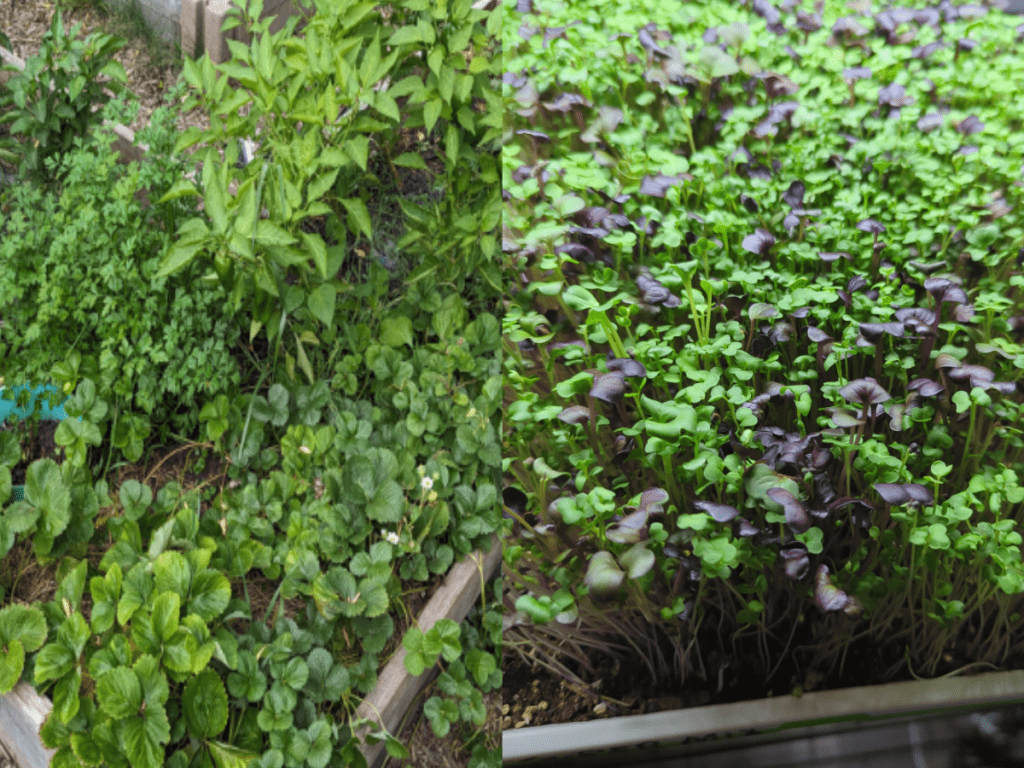
I’ve been gardening in some form for most of my life.
When I was young, it was with my grandparents and parents. Summers meant rows of vegetables, dirt under your nails, and food that actually tasted like something.
My grandparents especially had a huge garden it had to be at least a half acre, I could spend hours tilling, watering and just tending to plants. They had an apple tree, and a huge raspberry patch. I owe a lot to them for teaching me about plants and food at a young age and how to provide for yourself and others. My grandma always donated to charities and food banks with the extra produce they had.
For the last 13 years, it’s been with my wife and kids.
The scale has changed. The responsibility has changed.
But the goal hasn’t.
We grow food because it feeds our family and because it teaches something you can’t learn from a grocery store shelf.
We Keep It Simple: Grow What You Actually Eat
We don’t try to grow everything.
We grow what we’ll use.
Most years that means:
- Corn
- Beans
- Cucumbers
- Tomatoes
- Sweet peppers
Every few years we rotate in hot peppers to dry for salsa and seasoning:
- Habanero
- Jalapeño
- Cowhorn (a large cayenne variety)
We’re not chasing novelty crops. We’re growing ingredients.
Tomatoes become sauce.
Cucumbers become pickles.
Peppers go into salsa.
Corn and beans fill meals.
The garden feeds directly into the system we use in How We Feed a Family of 7 on a Budget — it’s not decorative. It’s functional.
Heirloom Seeds and Why Variety Matters
Over the years, I’ve learned that where you get your seeds matters.
Box store and hardware store seeds will grow — but selection is limited and quality can be inconsistent.
I prefer ordering from dedicated seed suppliers like True Leaf Market.
The difference:
- Wider variety selection
- Reliable germination
- Access to heirloom varieties
I tend to favor heirloom seeds over hybrids. The older varieties — the “OG” seeds — have flavor and history behind them. You can save them year after year if you choose.
Having control over variety means:
- Better taste
- Better yield for your climate
- More control over what you’re actually feeding your family
Seeds aren’t expensive — but good seeds make a difference.
You can make your seeds even better by saving seeds from each season, then you don’t have to buy seeds unless you want to grow a new vegetable or variety. These seeds are also adapted to your climate and soil as these have a season under them and have adapted. I have not bought seeds in years because we always save seeds from each season. We have so many seeds even if we didn’t do this for several years we would have plenty of seeds to grow for many season.
Microgreens: Growing Food Indoors All Year
The outdoor garden feeds us in season.
Microgreens fill the gap.
We grow microgreens indoors on simple rack systems year-round — winter and summer.
They’re:
- Fast (7–14 day cycles)
- Nutrient-dense
- Easy to scale
- Minimal space required
All of our microgreen seeds also come from True Leaf Market, and we use trays from Bootstrap Farmer.
Microgreens are one of the easiest ways to produce real food even when the ground is frozen.
They don’t replace the garden — but they extend it.
Berries: Low Effort, High Reward
We keep it simple here too.
We have:
- A raspberry patch
- A strawberry patch
They don’t need to be huge.
We don’t usually can from them.
But fresh berries in the summer — especially when you have kids — are hard to beat.
Some seasons they produce heavily.
Some seasons less so.
But once established, they’re low maintenance and give back every year.
Not Everything Has to Come From Your Backyard
One thing we’ve learned over the years:
You don’t have to grow everything yourself.
Sometimes the smartest move isn’t expanding your garden it’s buying in bulk directly from the source when something is in season.
Living in Wisconsin, we take advantage of local orchards and farms.
For example:
- We’ve picked 20 pounds of strawberries from a local farm for around $35.
- We go cherry picking when they’re in season.
- Apples and other fruit are significantly cheaper when bought directly from the orchard in bulk.
Twenty pounds of strawberries sounds like a lot — but when you freeze them, make jam, or use them for baking, they stretch a long way.
The same is true for:
- Apples
- Pears
- Blueberries
- Raspberries
- Whatever grows abundantly in your region
Buying produce at peak season pricing — especially when you pick it yourself — is often dramatically cheaper than buying small plastic containers at grocery store markup.
The key isn’t “grow everything.”
The key is go to the source when food is abundant.
Sometimes that source is your backyard.
Sometimes it’s a local farm.
Either way, you’re cutting out middle layers of cost.
The Garden Feeds the System
Gardening isn’t separate from our grocery budget.
It connects directly to:
- Bulk cooking
- Freezing
- Preserving
Tomatoes become sauce.
Peppers become salsa.
Fruit gets frozen.
That’s why freezer space matters. That’s why tools matter. That’s why structure matters.
The garden lowers our grocery bill — but more importantly, it stabilizes it.
Prices at the store can fluctuate.
Seeds and soil are predictable.
Why We Don’t Overcomplicate It
We’re not trying to be a full-scale homestead.
We’re trying to grow food consistently, year after year, without burning out.
That means:
- Growing staples
- Buying quality seeds
- Keeping infrastructure simple
- Teaching the kids as we go
The goal isn’t perfection.
The goal is production.
If the garden feeds your family and teaches your kids something about where food comes from, it’s doing its job.
Final Thoughts
Gardening for us isn’t a hobby.
It’s part of how we live.
It connects:
- Budget
- Food quality
- Time outside
- Teaching our kids
- Seasonal living
You don’t need acres.
You don’t need fancy raised beds.
You need soil, seeds, and consistency.
And maybe a little dirt under your nails.
– Just a note from the yard.