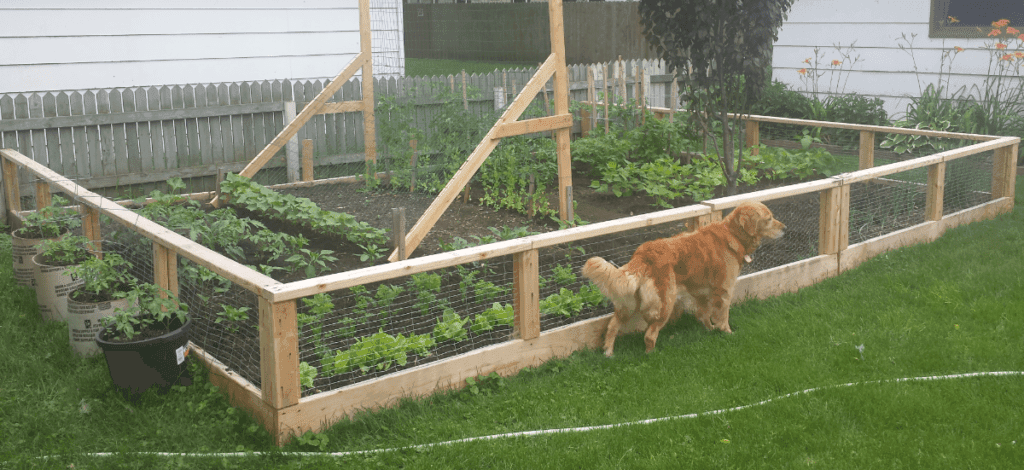
There’s a moment early on in gardening where things stop being theoretical.
You can read about planting times, spacing, soil, and techniques. You can watch videos and plan everything out.
But at some point, you actually put something in the ground.
And that’s when the real learning starts.
Because the garden doesn’t teach in ideas.
It teaches through experience.
You learn patience whether you want to or not
One of the first things the garden teaches you is patience.
Not the kind you choose — the kind you’re forced into.
You plant something, and then you wait.
There’s no way around it.
You can’t speed it up. You can’t check progress every hour and expect results. Most of what’s happening is invisible for a while.
That waiting can feel uncomfortable at first, especially if you’re used to things moving quickly.
But over time, it starts to feel normal.
You begin to trust the process a little more. You stop expecting immediate results and start paying attention to small changes.
It’s a different pace than most of life runs on, and that’s part of what makes it valuable.
You learn that effort doesn’t guarantee results
Another lesson that shows up pretty quickly is that doing everything “right” doesn’t always lead to success.
You can plant at the right time, water consistently, and take care of your plants — and still lose some of them.
Weather changes.
Bugs show up.
Something just doesn’t grow the way you expected.
At first, that can feel frustrating. It’s easy to take it personally, like you did something wrong.
But the longer you garden, the more you realize that not everything is within your control.
You can influence the outcome.
You can improve your chances.
But you can’t guarantee results.
That’s a hard lesson, but it’s also a useful one. It shifts your focus away from perfection and toward consistency.
You start paying attention in a different way
Spending time in a garden changes how you notice things.
You start to pick up on small details:
How the soil feels after rain.
Which areas dry out faster.
What plants are thriving and which ones are struggling.
When something looks slightly off.
At first, you don’t really know what any of it means.
But you notice anyway.
And over time, those observations start to connect.
You don’t need to look everything up. You just start to understand your space a little better.
That kind of awareness carries over into other parts of life too. It’s similar to the idea I wrote about in Being Present Is a Skill (And I’m Still Learning). The more you pay attention, the more you start to see.
Small, steady work matters more than big effort
Gardening doesn’t reward intensity as much as it rewards consistency.
A little work done regularly goes further than a single day of trying to do everything at once.
Watering, checking, harvesting, adjusting.
None of it is complicated, but it matters that you keep showing up.
That pattern shows up in a lot of other places too. It’s easy to overlook small efforts because they don’t feel significant in the moment.
But over time, they’re usually what make the difference.
You learn to work with things instead of against them
One of the more subtle lessons the garden teaches is how to work with conditions instead of constantly fighting them.
Some areas get more sun.
Some plants do better than others.
Some seasons are more productive than expected.
Instead of forcing everything to match your plan, you start adjusting to what’s actually happening.
Moving plants. Trying different things. Letting go of what isn’t working.
It becomes less about control and more about cooperation.
That mindset shift is similar to what I wrote about in Choosing Simplicity Over Easy in Everyday Life. Sometimes the simplest path isn’t forcing things to work — it’s adjusting to reality and working within it.
Not everything has to be perfect to be worthwhile
Early on, it’s easy to feel like you’re doing everything wrong.
Plants don’t look the way you expected. Rows aren’t straight. Yields aren’t huge.
But over time, your expectations start to shift.
You realize that even a small harvest matters.
Even a few successful plants are worth it.
Even the mistakes are part of the process.
The garden doesn’t require perfection to be worthwhile.
It just asks that you show up and keep learning.
The lessons don’t stop
The interesting thing about gardening is that the lessons don’t really end.
Every season is a little different.
Every year teaches you something new.
Even when things go well, there’s always something you’d adjust next time.
But that’s part of what makes it satisfying.
You’re not trying to master it once and be done.
You’re just getting a little better each season.
It starts as a project, but it becomes something else
At the beginning, a garden often feels like a project.
Something you’re trying out. Something you want to make work.
But over time, it becomes something more steady than that.
Part of your routine.
Part of your space.
Part of how you spend your time.
And along the way, it quietly teaches lessons that go far beyond growing food.
Lessons about patience, attention, effort, and letting go of control.
Not all at once.
Just a little more each season.
– Just a note from the yard.