Feeding a large family isn’t about fancy appliances.
It’s about durable tools that make real food practical — tools that support bulk cooking, freezing, fermenting, baking, and cooking from scratch every week.
In our home in Wisconsin, feeding a family of seven often lands around $900–$1,200 per month, depending on the season and what’s on sale. Grocery prices vary widely across the country, but the tools and systems below are what make that number possible for us.
These are the tools we actually use. Not trendy gadgets. Not influencer kitchen decor. Just things that earn their place.
If you’ve read How We Feed a Family of 7 on a Budget or How Much Does It Cost to Feed a Family of 7?, these are the tools behind that system.
Crock Pot (Absolutely Essential)
If you’re feeding a large family, you need a crock pot.
We use ours constantly for:
- Chili
- Pulled pork (To reheat with BBQ sauce after smoking)
- Whole chickens
- Dump-and-go soups or meals
- Bone broth
There’s something powerful about putting food in before work and coming home to a warm meal.
It saves time.
It saves stress.
It prevents expensive last-minute takeout.
You can batch cook in it, portion it out, and freeze meals for later. For us, it’s not optional.
Large Stainless Steel Stock Pot
I have a big stainless pot from IKEA that I absolutely love.
It handles:
- Bulk pasta
- Large batches of soup
- Beans
- Broth
- Canning prep
When you’re cooking for seven, small pots just create more work. One large batch means dinner plus leftovers.
Cast Iron Pans
Everyone should own at least one.
We use cast iron for:
- Searing meat
- Frying eggs
- Skillet meals
- Baking cornbread
- Reheating leftovers
They’re durable, simple, and nearly indestructible. No coatings to scratch. No gimmicks. Just heat and food.
A Real Cutting Board (Butcher Block Style)
A thick hardwood cutting board makes daily cooking easier.
- It doesn’t slide around.
- It protects your knives.
- It feels stable when processing large amounts of food.
Yes, they cost more upfront. But if you cook every day, it’s worth it. With basic care, it will last decades.
Kitchen Scale
We go through a 50-pound bag of flour roughly every two months.
If you bake that much, measuring by weight matters.
A scale:
- Prevents wasted flour
- Improves consistency
- Reduces failed batches
When you’re baking sourdough regularly, consistency equals savings.
Freezer Bags (Quart & Gallon)
Most of our long-term freezing goes into quart and gallon freezer bags.
Plastic containers often crack in a deep freezer over time. Bags:
- Stack better
- Freeze flatter
- Save space
For fridge storage and weekly meal prep, a simple, inexpensive plastic container set works fine.
Freezer = long term.
Containers = short term.
Mason Jars (Lots of Them)
We use:
- Pint jars for tomato sauce
- Quart jars for pickles and larger storage
- Ferments
- Dry goods
- Leftovers
If you garden, preserve, or buy produce in season, jars multiply quickly. You will use more than you expect.
Pressure-Safe Reusable Glass Bottles
If you make kefir water or naturally carbonated drinks, you need bottles designed for pressure.
Cheap glass can fail under carbonation.
A proper reusable bottle is a small investment that prevents a big mess.
Freezer Space (The Real Budget Tool)
This might be the most important “tool” of all.
Freezer space allows us to:
- Buy meat when it’s on sale
- Freeze seasonal fruit
- Preserve garden produce
- Batch cook without waste
A $6 pack of chicken breasts bought on sale can turn into multiple meals. Cherries picked in season can still be feeding us months later.
Without freezer space, you’re forced to buy at whatever price the store sets that week. Our freezer generally is full at the start of the month and half empty by the end, a lot of seasonal stuff gets frozen to have through the winter.
We are actually thinking about getting a second freezer for buying a half cow, real savings buying right from the farmer.
What We Don’t Buy
We don’t buy:
- Single-use gadgets
- Trendy countertop appliances
- Meal kit subscriptions
- Pre-made shortcuts
Convenience compounds your grocery bill.
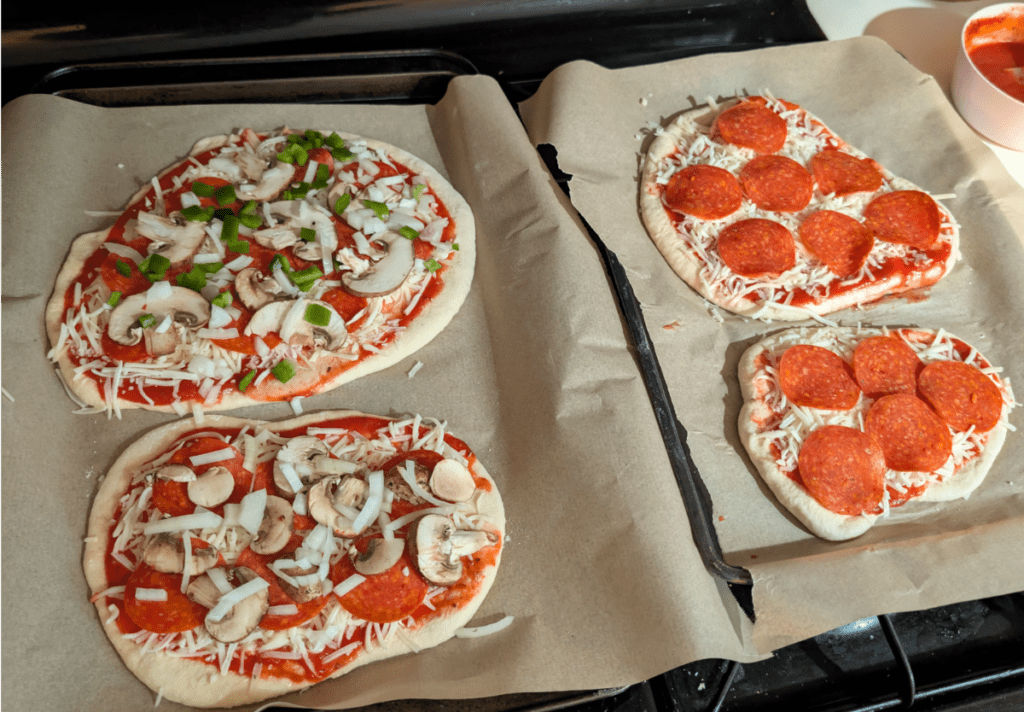
A frozen pizza can cost $10–14.
Homemade pizza — using flour, simple toppings, and basic sauce — costs a fraction of that.
Tools support a system.
Gadgets support impulse.
Why This Matters
Feeding a large family on a reasonable grocery budget doesn’t happen by accident.
It happens because:
- We cook at home.
- We buy in bulk.
- We preserve food.
- We use tools that make that sustainable.
You don’t need a dream kitchen.
You need durable basics that earn their keep.
– Just a note from the yard.